

Adding a mini split to a New Mexico home with a furnace

Describe your mini split job once, to one pro.

Fill out one form

Can I add a mini split to my house if I already have a gas furnace?

Your gas furnace handles winter heat, but it wasn't built to cool the house, and New Mexico summers get hot and dry enough that you're looking at other options. A mini split seems like a way to add cooling without touching the furnace or the ductwork it already uses. You want to know if the two systems can share the house without getting in each other's way.

Yes, a mini split works alongside a gas furnace

A mini split and a gas furnace don't compete for the same job. The furnace heats through its existing ducts, and the mini split cools (or adds heat to a specific room) through its own wall or ceiling unit, with no ductwork at all. They run on separate systems, so installing one has no effect on how the other operates. In most New Mexico homes heating with gas, this setup is common: the furnace keeps running through the winter, and the mini split handles the dry summer heat in the rooms it's installed in, or carries the whole house if it's sized that way. An electrician still needs to confirm the house has the capacity for the new unit's circuit, since the mini split runs on electricity and the furnace doesn't.

A white wall-mounted mini-split air conditioner unit installed high on a light gray interior wall below crown molding, with a bamboo-shaded window at the lower left.

Properly matched and set

The mini split holds the room at the temperature you set it, without the unit running constantly to get there. Installed with the right size for the room and a tight line set connection, it keeps the refrigerant charge it left the factory with and cools evenly.


A wall-mounted mini-split air conditioner indoor unit with a dusty, discolored cover, installed near the ceiling on a plain light-colored wall.

Installed wrong

Dust and discoloration like this build up when a unit is undersized for the room or installed with a weak line set connection, forcing it to run longer than it should. A mini split that struggles this way wears out faster and costs more to run every month.

A gray-haired man in a dark sweater sits on a light gray sofa in a living room, looking toward a sunlit window with trees outside.
A gray-haired man in a dark blue sweater sits on a light gray sofa in a sunlit living room, looking off to the side, with a potted plant, shelving unit, and large glass doors behind him.
A bearded man with graying hair in a dark green sweater sits on a sofa in a living room, looking off to the side, with a sliding glass door and a dim kitchen doorway behind him.
A gray-haired man in a dark knit sweater sits on a light gray sofa in a living room, looking toward a sunlit window, with houseplants, a lamp, and framed art in the background.

A mini split doesn't plug into anything your furnace already uses. It gets its own circuit, its own breaker, and a line set that runs refrigerant between the outdoor condenser and the indoor head. That line has to be sized correctly for the distance it covers, and before it's charged, a licensed installer pulls a vacuum on it to get the moisture and air out. Skip that step and the compressor won't last. Where the indoor head goes matters too. Mounted high on the wall, the cold air it puts out drops and spreads through the room on its own, which is why you don't see them installed near the floor. Once it's running, it answers to its own remote, not your thermostat, so your furnace keeps heating the house in winter without any crossover between the two. If your electrical panel doesn't have room for the new breaker, that's its own step, separate from hanging the unit and running the line set.

How a mini split actually connects

  • A mini split runs on its own electrical circuit and doesn't tie into your furnace's ductwork or gas line at all.
  • The outdoor condenser connects to the indoor head through a line set carrying refrigerant, which has to be sized for the distance between them.
  • A licensed installer pulls a vacuum on the line set before charging it, which clears out moisture and air that would otherwise ruin the compressor.
  • The indoor head mounts high on a wall or ceiling so cold air drops down and mixes through the room instead of pooling near the floor.
  • Your furnace keeps running the thermostat for heat, while the mini split works off its own remote or control, so the two systems don't share a setpoint.
  • The condenser needs a dedicated breaker sized to the unit, and that's often a separate step from the mini split install itself if your panel doesn't have room.
A white wall-mounted mini-split air conditioner installed high on a beige interior wall below crown molding, with a window and light curtain on a black rod at right.
A mini split sized and charged correctly for the room keeps blowing cold without the compressor straining to keep up.
A wall-mounted mini-split air conditioner indoor unit with a dusty off-white casing and dark lower vent, installed high on a plain light-colored wall below a ceiling molding.
Dust caked on the casing like this usually means the filter hasn't been pulled and rinsed in a long time, and airflow is suffering for it.

Is one room staying hot no matter what you set it to?

You turn the mini split down low and the room gets close but never quite there, or it cools fast then the air coming out feels weak. Maybe you notice the outdoor unit running a long time before it shuts off, or the indoor head icing up along the bottom. Some homes have a line set that was run too long for the unit's size, or a head mounted where the sun hits it most of the afternoon. Left alone, a unit working that hard wears out its compressor sooner than it should, and your power bill carries the extra load until it does.

A middle-aged woman with shoulder-length dark hair, wearing a gray cardigan over a cream top, sits in an upholstered armchair and looks toward a sunlit window, with a shelf holding framed pictures and a plant behind her.
A woman and a child wrapped together in a knitted gray blanket on a couch, with the child's head resting on her shoulder and a lit table lamp and houseplant in the background.
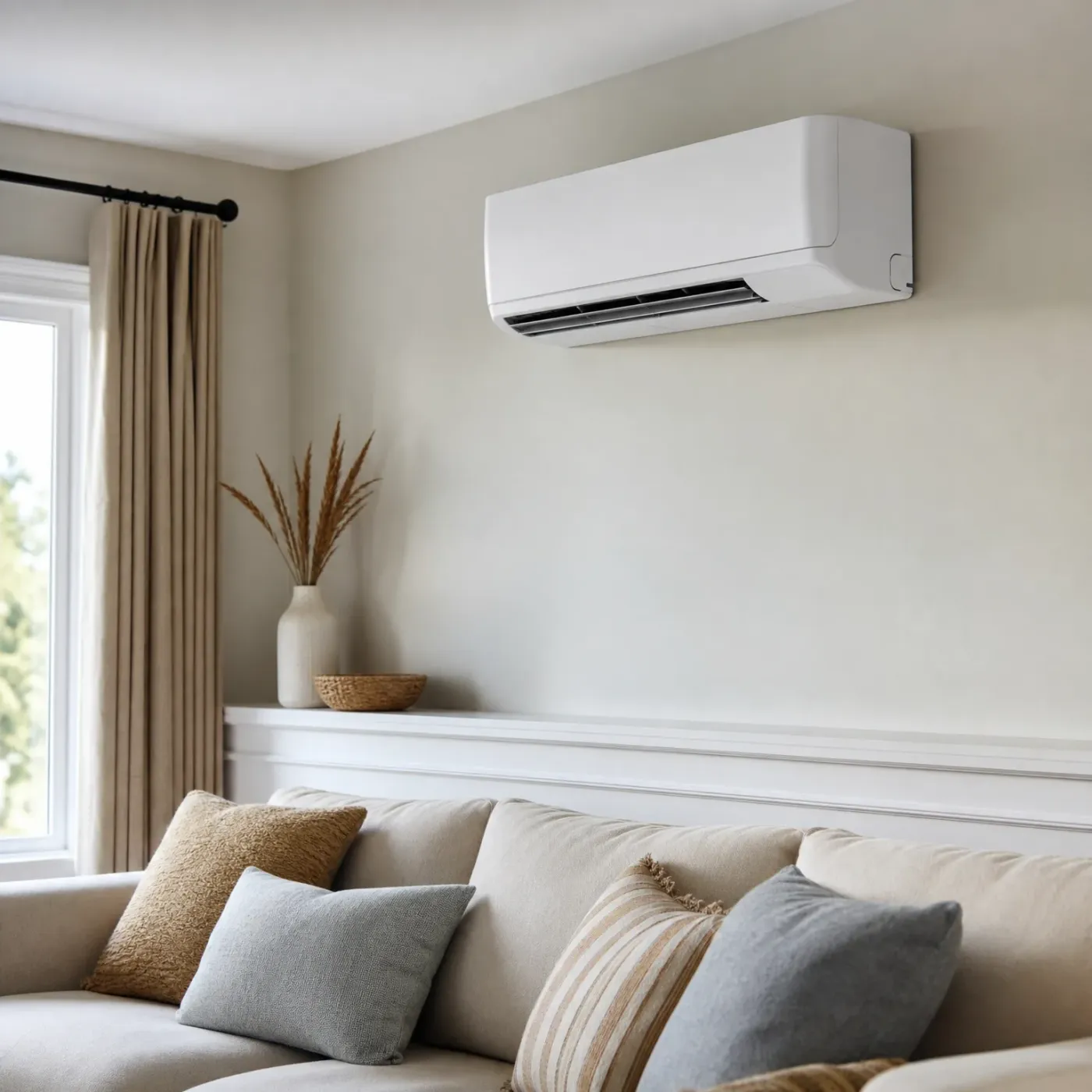
A white wall-mounted mini-split air conditioner on a pale wall above a beige sofa with assorted cushions, beside a window with long curtains and a shelf holding a vase of dried grasses and a woven bowl.

One form, no calling around

Only one pro gets your request, so you hear from one company.

Skip collecting and comparing quotes for the new mini split.

Get a licensed local pro

You're not committing to anything by asking.

DIY Install vs. Licensed Install

DIY or handyman install

  • Setting the line set length wrong or leaving a bad flare joint lets refrigerant leak out slowly, and the unit loses capacity over months without an obvious cause.
  • Running the electrical circuit without a licensed electrician skips the inspection that catches a breaker sized wrong for the compressor.
  • A hole drilled through the wall at the wrong angle lets water track back inside instead of draining out, and you won't see the damage until it shows up in the wall.
  • Without a vacuum pump pulling the line set down properly, moisture and air stay trapped in the refrigerant loop and the compressor wears faster.
  • Mounting the indoor head without checking the wall studs can mean it works loose over time, especially if it's run hard every summer.

Licensed local install

  • A contractor who installs these across New Mexico summers knows how to size the unit for a room instead of guessing from the square footage alone.
  • Pulling the proper permit means the install gets inspected, and that inspection is what protects you if something goes wrong later.
  • The line set gets evacuated with a vacuum pump and checked for leaks before the system is charged, so it starts out right.
  • One contractor handles the whole job, from the electrical circuit to the wall penetration to the final charge, so you're not coordinating separate trades yourself.
  • Someone local who services this equipment every season knows which brands and models tend to need attention sooner, and sets it up to avoid that.
A white wall-mounted mini-split air conditioner installed high on a beige interior wall near the ceiling, with a white-framed window at the left edge.

Holding the room steady

Set it to 72 and the room gets to 72 and stays there. The compressor cycles normally instead of running flat out, and the air coming off the unit stays cold even after it's been going for hours.

A dusty, stained wall-mounted mini-split air conditioner indoor unit near the ceiling on a plain beige wall, with visible lint buildup at its intake grille.

Dust and grime building up

That dark buildup across the casing and filter means air isn't moving through the way it should. A filter that hasn't been pulled and rinsed in a long time chokes the airflow, and the room never quite cools the way it used to.

A white wall-mounted mini-split air conditioner indoor unit installed near a textured ceiling on a plain beige wall, with visible dust and discoloration on its casing and vent.
Before you get your mini split installation
A white wall-mounted mini-split air conditioner indoor unit on a light gray wall above a white baseboard and wood-look floor.
After you get your mini split installation
A two-story house with gray and light gray siding, white-trimmed windows and a white front door, flanked by deciduous trees, with a partly browned lawn in front under a clear blue sky.

New Mexico summers feel hot, but the air itself carries little moisture. The dew point averages 45°F across June, July and August, based on weather data for where homes sit in the state. That dry air is part of why a mini split can keep a room cold without much strain, since it isn't also fighting to wring water out of the air the way a unit in a humid state would. You'll notice the air coming off the head feels dry and cool rather than damp. It also means the outdoor unit isn't working overtime just to pull moisture down before it can drop the temperature.

NASA POWER T2MDEW county cells weighted by homes

A mini split works alongside your gas furnace without trouble. The furnace keeps handling winter heat through its own ductwork and gas line, and the mini split cools the room it's installed in on its own electrical circuit, sized and charged for that space. Getting that sizing and charge right the first time is what decides whether it holds 72 degrees for years or starts losing capacity within months. That's the kind of install a contractor who works on mini splits all summer in this climate gets right without guessing, because they've seen what a bad flare joint or an undersized line set does to a system here. When you request help through this page, it goes to one licensed contractor local to New Mexico, not a handful of companies competing for the job, so you're not stuck explaining your house and your furnace setup over and over to different voices on the phone. You'll know who's coming and why they're qualified to do it.

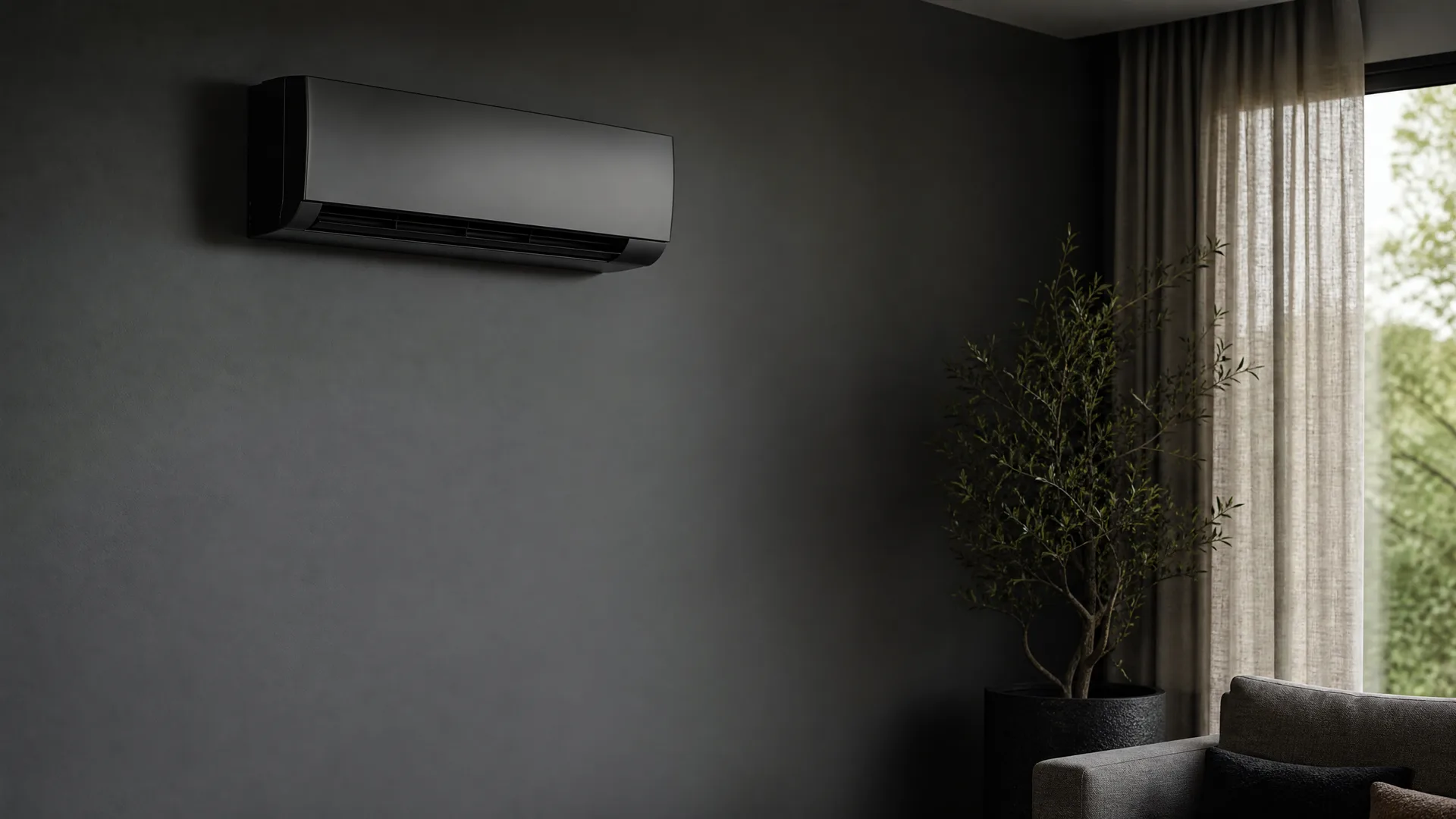
A dark wall-mounted mini-split air conditioner on a gray interior wall, with a potted olive-like tree, sheer curtains over a window showing green foliage, and a gray sofa in the lower right corner.

Skip the search

Your request stays with one local pro.

Step 1 of 3: Equipment