300% to 400% efficient
That's the range a mini split typically runs at, meaning it moves 3 to 4 units of heat for every unit of power it uses. Baseboard heat never beats 100%.
 Hand it off
Send the form and the search for an installer is over.
You already have the mini split. Now you're trying to figure out if it's actually cheaper to run than baseboard heat, or if that's just something people say.
Baseboard heat runs on electric resistance. It makes heat directly from power, one unit of electricity for one unit of heat. A mini split moves heat instead of making it, which is why it can put out more heat than the electricity it uses would suggest. That difference shows up most in a New Mexico winter, where cold nights are common but not the brutal, sustained cold that pushes a heat pump to its limit.
Most homes around you heat with gas, so you may not have a lot of neighbors to compare notes with on electric heat specifically. That makes it harder to just ask around and get a straight answer about your own setup.
What matters more than the general case is whether your mini split is installed right for your house. Sizing, placement, how well it handles the coldest nights you actually get here. A unit that's undersized or set up wrong will cost more to run no matter what the manufacturer specs say, and a baseboard system that's been patched together over the years has its own problems. The honest comparison is specific to your walls, your climate zone here, and the condition of what's already in place.
That's the kind of thing a contractor needs to look at directly, not something a general answer can settle for you. Once you request installation help through this page, you're done hunting down contractors, calling around, and repeating your situation to every one of them. That part of the work is off your plate. Someone qualified takes it from here.
A mini split costs less to run than baseboard heat, usually by a wide margin. Baseboard heat makes warmth straight from electricity, one unit of power in, one unit of heat out. A mini split moves heat instead of making it, so for every unit of power it uses, it can move two or three units of heat out of the outside air into your home. That difference holds through most of a New Mexico winter, since the cold here isn't the kind that cripples a heat pump's efficiency the way damp, near-freezing climates do. Power here is priced about the same as anywhere else, so the savings come from using less of it, not from a cheap rate. Most homes around you heat with gas, which changes the comparison again, but against baseboard, your mini split is doing more work per dollar most nights it runs.




That's the range a mini split typically runs at, meaning it moves 3 to 4 units of heat for every unit of power it uses. Baseboard heat never beats 100%.
If your mini split is backup heat for a gas furnace, the comparison that matters most is mini split versus gas, not mini split versus baseboard.


Skip searching for a mini split pro and answer a few questions instead.
After this form, you can stop searching for a mini split pro.
You only hire the pro if you want to.
Walk the rooms your mini split doesn't reach. If a baseboard heater is still kicking on in the hallway or the back bedroom, that part of the house is making heat straight from electricity while the mini split room moves it for a fraction of the cost. Check your breaker panel or thermostat settings for any baseboard zones still set to run. A mini split only heats the space it's mounted in, so anywhere else in the house still depends on whatever heated it before. If that's baseboard, those rooms are paying full price for heat while the one with the mini split pays far less for the same warmth.

A mini split loses its advantage below freezing. Older units lose capacity as the outdoor air gets colder, and some shut off backup strips or just can't keep up on the coldest nights here. That's when a lot of homes let the baseboard heater in that room pick up the slack. On those nights the two systems aren't really competing. The baseboard is doing the job the mini split can't, and that's fine, as long as it's not doing that job most of the winter.

If your home heats with gas and the mini split is just there to take the edge off in one room, the comparison looks different than mini split versus baseboard. Gas is usually cheaper to run than electric resistance heat, so the baseboard heater, if you still have one wired in, might be the most expensive way to heat any part of this house. Replacing that baseboard with another mini split zone, or just leaning harder on the furnace, is worth working out room by room.
You get that the mini split uses less power, but the word efficient doesn't explain anything on its own. You want to know what's actually happening inside the unit that makes it cheaper than a baseboard heater, since both of them are plugged into the same kind of electric service and one still costs you less to run.
A baseboard heater has a coil inside it that gets hot when power runs through it, the same way a toaster does. All the energy goes into making heat directly. A mini split does something different. Its outdoor unit has a compressor that pulls heat out of the outside air, even when it's cold, and a refrigerant line carries that heat inside to the indoor unit, which blows it into the room. The power only runs the compressor and the fans, not the heat itself. That's why it can put out several times more heat than the electricity going into it would make on its own if it were just warming a coil.

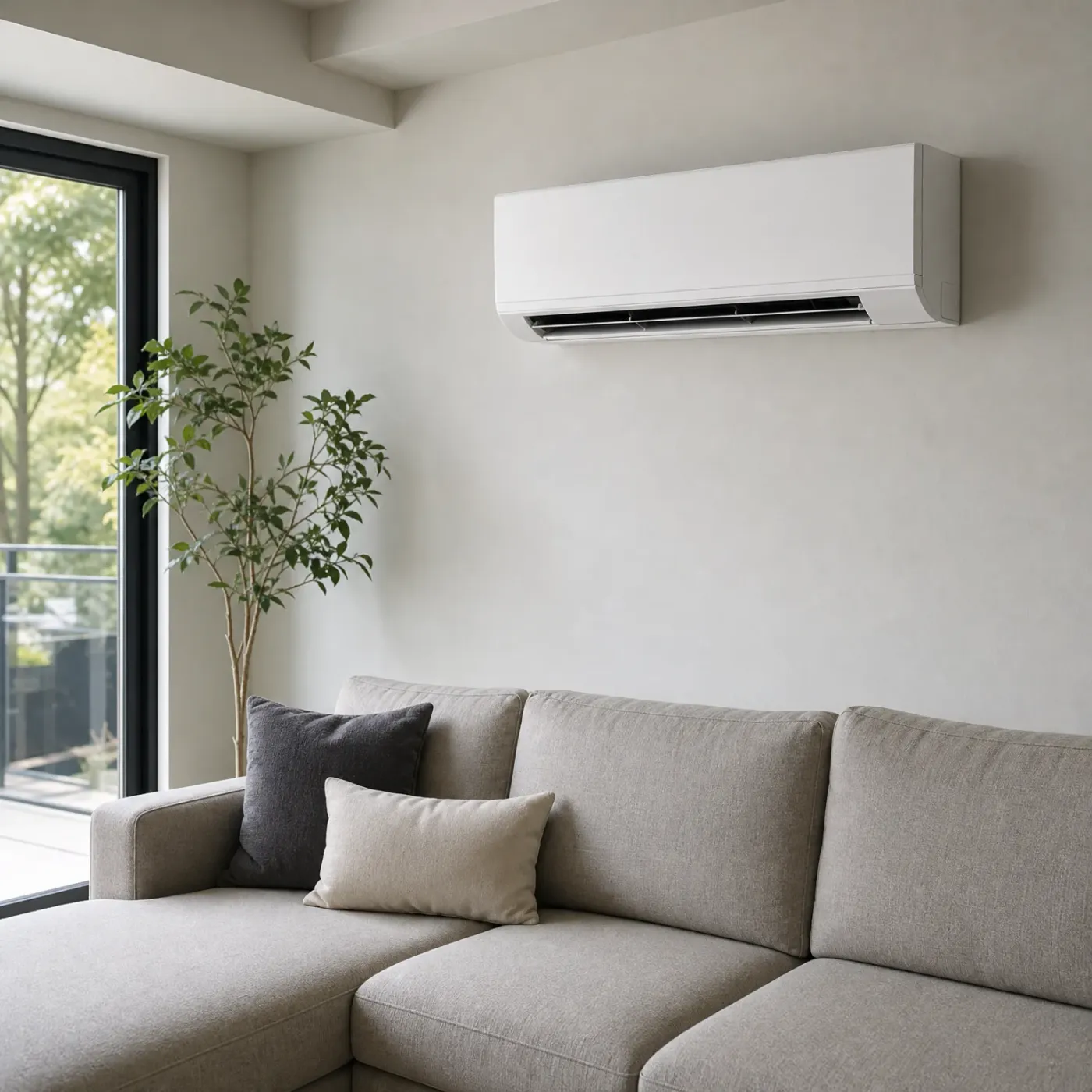
This is what you want to see. Clean wall, clean unit, warm air moving where you're sitting. A mini split running like this is doing the job those efficiency numbers promise, and your power bill shows it.

Dust caked across the face and staining on the wall above it means the coil underneath is just as dirty. A mini split working this hard to move air loses the efficiency that made it cheaper than baseboard in the first place.



NOAA's data for where homes sit in New Mexico puts the summer dew point at 45°F on average across June, July and August. That's dry air. It matters more for your mini split's cooling side than its heating side, since dry air gives the coil less moisture to wring out before the room actually cools. You'll notice the room drop in temperature faster than it would somewhere muggy, and the unit cycling off sooner once it gets there. Dry heat doesn't carry the same weight, so your mini split isn't fighting humidity to begin with, just the outdoor temperature itself.
NASA POWER T2MDEW county cells weighted by homes


Outdoor unit pulls heat energy out of the cold outside air
Refrigerant absorbs that heat and turns to gas
Compressor squeezes the gas, raising its temperature further
Indoor coil releases that heat into the room air
At 14.85 cents per kilowatt-hour, every unit of power your mini split moves costs you something real, which is exactly why the 3-to-1 or 4-to-1 ratio matters. Baseboard heat burns through that same rate four times faster for the same warmth.
EIA-861 2025 statewide residential average

Where you landed on this: a mini split that's sized right, sited right, and actually covering the rooms you live in will cost less to run than baseboard, usually by a wide margin. Where it falls short is the install, not the idea. A unit that's too small for the space, mounted where it fights the sun, or left to cover a house that still leans on baseboard in the back rooms won't show you those savings even though the technology is doing what it's supposed to.
You don't have to sort that out room by room on your own. Finding someone who installs these correctly in New Mexico means calling around, explaining your setup more than once, and comparing quotes that may not even be pricing the same job. Send the form and that part is done. You're left with one phone call from someone who already knows what you're asking about, not a list of names to work through on a weeknight.


Let someone else find the pro