Hand off the mini split problem
Why your mini split has ice on it in a New Mexico winter
Ice on your mini split in the middle of a New Mexico winter feels backward, but it's a common failure, not a fluke of the cold. It usually points to something specific, like low refrigerant or a blower that isn't moving enough air across the coil. This page gets into what's actually going on and what fixing it takes off your hands once you send the form.
Hand it offIce on the outdoor unit in winter usually means the defrost cycle isn't working right. Every mini split heating a home on a cold New Mexico morning builds a thin layer of frost on its outdoor coil, that's normal, and the unit is built to clear it on its own every so often by briefly running in cooling mode. When ice keeps building instead of melting off, something is stopping that cycle: a frozen or faulty sensor, a stuck reversing valve, or a fan that has slowed down and can't pull enough cold air across the coil to trigger defrost properly. Low refrigerant does this too, because the coil runs colder than it should and frost forms faster than the system can clear it. Left alone, a mini split in this state struggles to heat the house at all, and ice sitting on the outdoor coil for long stretches can damage the fan motor or the coil itself. It's worth having someone look at it before a cold snap turns a struggling system into one that quits.


Your mini split handles frost on its own. The outdoor coil runs cold enough in winter to pull a layer of frost most mornings, so every so often the system reverses itself for a few minutes, sending hot gas out to the coil instead of into your house. That's what melts the frost off. A sensor on the coil is what tells the board when it's time to do this. It reads the coil's temperature and starts defrost once frost has built up past a certain point. You might notice the indoor fan slow down or pause during this, that's normal too, it's just not blowing on a coil that's mid-defrost. The trouble starts when that sensor reads wrong, or the refrigerant charge is low, or the blower has lost speed from a dirty coil or a weak motor. Any of those breaks the timing. Frost keeps building instead of clearing, and within a few cycles it's not frost anymore, it's ice.
How defrost is supposed to work
- The outdoor unit runs a reversing valve backward for a few minutes to send hot gas through the outdoor coil and melt the frost off.
- A sensor on the outdoor coil tracks its temperature and tells the control board when frost has built up enough to trigger defrost.
- During defrost the indoor fan usually slows or stops, which is why you might feel a short pause in warm air inside.
- If the sensor reads wrong or fails, the board never starts defrost, and frost keeps building until it turns to solid ice.
- Low refrigerant drops the coil's temperature further, so it frosts faster and the defrost cycle can't keep pace with the buildup.
- A blower that's lost speed from a dirty coil or failing motor lets frost form faster than the system can clear it.


Hand off the search today
A mini split that keeps icing over in a New Mexico winter isn't going to fix itself, and running it anyway just pushes a blower or a defrost board that's already struggling closer to a full breakdown. Most homes here heat with gas, so the mini split is likely carrying a smaller part of the load, but when it ices up and quits, you lose that room or that zone until someone gets eyes on it. The part that's failing, a defrost sensor, a low charge, a blower pulling weak airflow, isn't something to guess at from the living room. It takes someone who works on these systems through New Mexico winters and knows which of those parts tends to go first. Send the request and that search stops being your problem. It goes to one local contractor who handles this equipment regularly, not a handful of companies competing for the job, so you're not stuck fielding calls while your mini split sits there frozen.
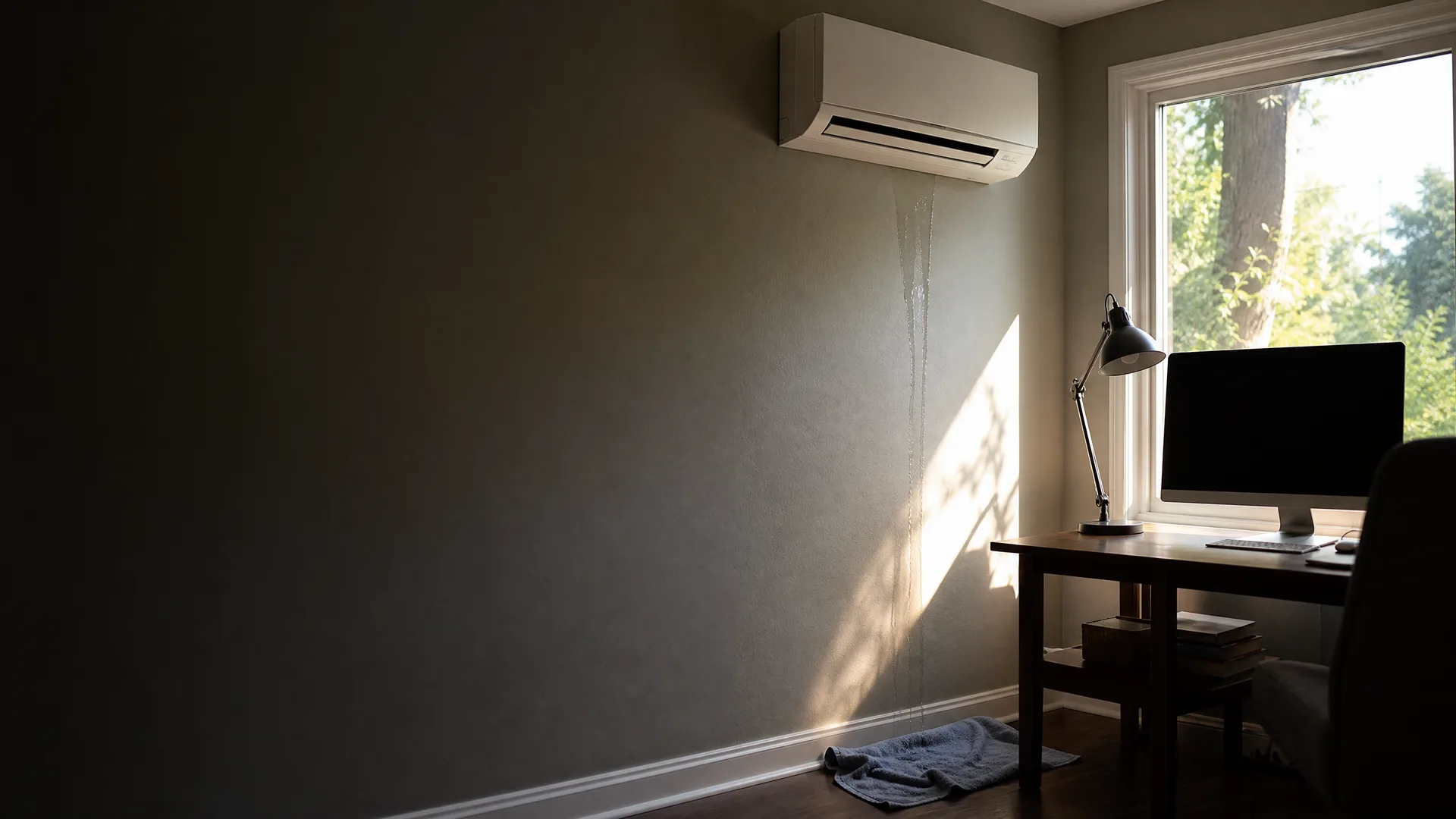
It's July, and the home office is the one room you keep closed up tight against the heat outside. You're at the desk when you notice the carpet feels wet under your sock. The streak runs down the wall below the indoor unit, soaking into the drywall, and a towel is already down to catch what's dripping now. The mini split is still blowing cold air, so nothing sounds wrong. You wipe the sill, press the towel flat with your foot, and check the wall again a few minutes later to see if the line has grown.
Power costs 14.85 cents per kilowatt-hour statewide
At 14.85 cents per kilowatt-hour, a mini split stuck on defrost or running flat out with an iced coil just burns more power without warming the room. Letting it run that way for days adds up on the bill fast, so it's worth getting looked at once you see frost.
EIA-861 2025 statewide residential average

The thermostat calls for heat and the compressor starts running.
Frost builds slowly on the outdoor coil as heat is pulled from the air.
A sensor on the coil reads the frost buildup and signals the control board.
The reversing valve flips, sending hot gas outdoors to melt the frost.


What the Ice Is Telling You
- Ice on the outdoor unit in winter means the defrost cycle isn't clearing frost the way it should.
- A dirty coil, a weak sensor, or a blower not moving enough air are the usual causes behind a failed defrost cycle.
- Letting an iced unit keep running pushes a struggling blower or defrost board closer to breaking down altogether.
- An iced unit burns more power without heating the room, so the cost of waiting shows up on the bill.
- The same system that heats through winter is what cools your home through the hot, dry summer months here.
- A technician who checks the coil, the sensor, and the airflow can usually tell within one visit what's actually failing.
Ice on the outdoor unit isn't the problem by itself. It's the sign that the defrost cycle stopped doing its job partway through, and that usually traces back to one of three things. A coil caked with dust can't shed heat fast enough during defrost, so frost keeps building instead of melting off. A sensor reading the coil temperature wrong can tell the control board to end defrost too soon or skip it altogether. A blower that isn't pulling enough air across the coil leaves cold spots where frost takes hold and spreads. Any one of those is enough to tip the cycle from routine to failing.
Once that happens, the unit doesn't just run less efficiently. It runs harder, and the parts already struggling, the blower motor, the defrost board, take the strain of a system trying to heat through ice that keeps coming back. Left alone, that's how a frozen coil turns into a motor or board that's actually burned out. In the meantime, the unit is pulling power it isn't turning into heat, which shows up on the bill before it shows up as a breakdown.
The same outdoor unit icing up now is what you'll run all summer to keep the house cool, so whatever's behind the frost is worth finding before the season turns. A technician who works on these year-round can usually narrow it down to the coil, the sensor, or the airflow in a single visit, and go from there.




Mini Split Repair
Finding a pro stops being your job
The pro who reaches out is licensed in New Mexico.
