
Draining the way it should
This is a mini split running clean. Condensate moves through the drain line and outside, same as any day it's done its job. No puddle on the hardwood, no stain creeping across the ceiling below it.
Cold weather running a mini split has you finding water on the floor or dripping from the indoor unit, and it doesn't make sense when the thing is supposed to be heating the room, not cooling it. You're not running it for AC, so a water leak this time of year feels off, and with people counting on that heat to stay comfortable, you want to know if this is something to worry about.
In winter a mini split still makes condensation, even in heating mode, because the outdoor coil can frost over during the defrost cycle and that frost melts into the drain pan. If the condensate drain line is clogged, cracked, or sitting somewhere it can freeze, that water backs up or drips out of the indoor unit instead of draining outside. A dirty air filter can add to it by icing the indoor coil. With New Mexico winters bringing nights well below freezing, a drain line run through an unheated space is more likely to freeze solid, which stops drainage completely and sends the water inside instead. Either way, it points to a drain or coil problem, not a sign the unit is broken beyond repair.
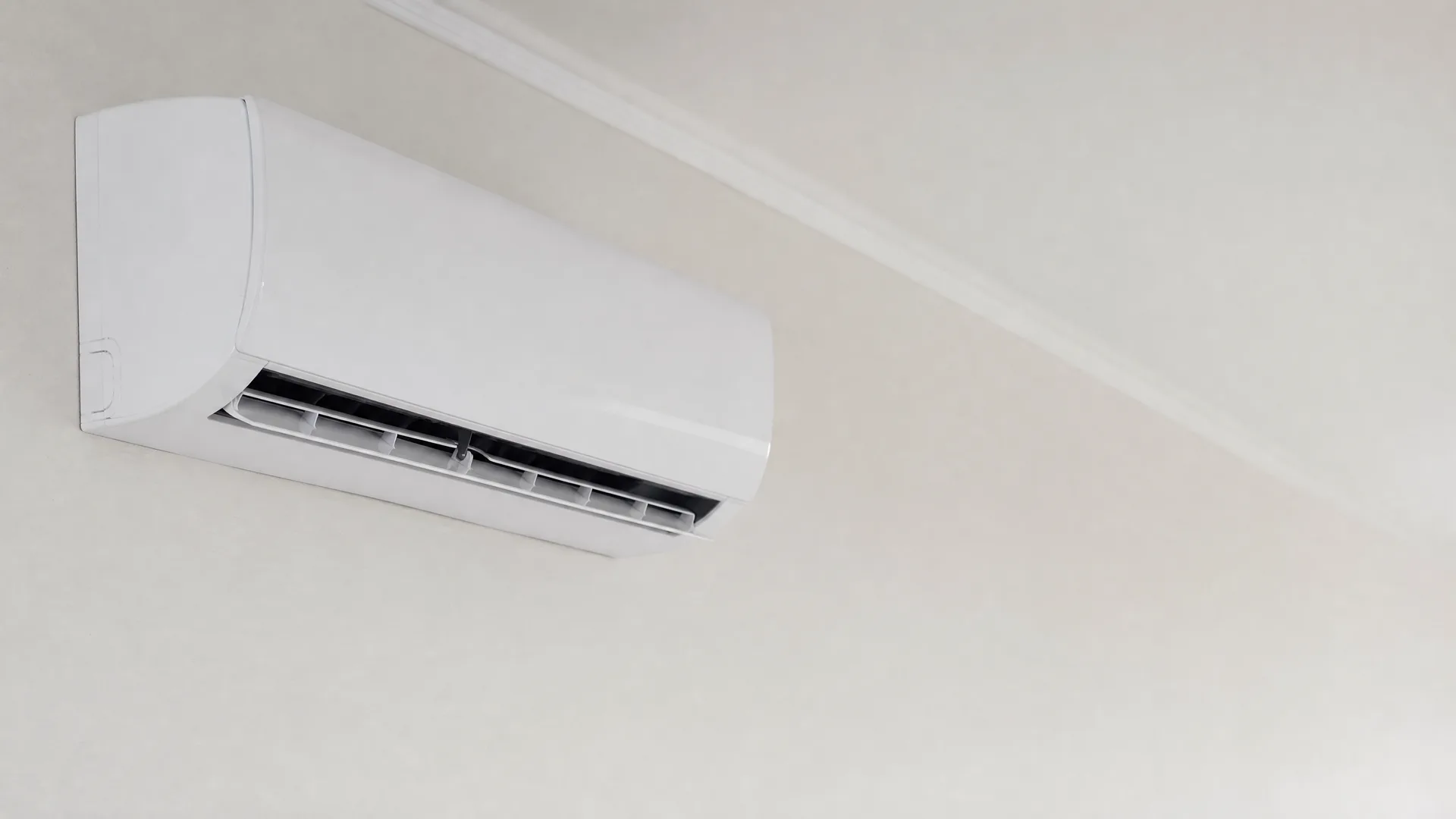
A mini split on heat mode still cools the refrigerant for a few minutes during defrost, when it reverses to melt frost off the outdoor unit. That short reversal can leave the indoor coil cold enough to pull moisture out of the air in your house. The water that forms has to go somewhere, and it drains through the same condensate line the system uses in summer. If that line is blocked or pitched wrong, the water backs up into the indoor unit instead.
Check the wall sleeve where the line set and drain tubing pass through to the outdoor unit. In a New Mexico winter, water sitting in that sleeve or in an exposed section of drain line outside can freeze overnight, especially after a hard freeze. Ice blocks the line completely, and the next cycle has nowhere for the condensate to drain but back into the indoor unit and out onto your floor or wall below it.
You'll likely notice it near the indoor unit first, a small puddle on the floor or windowsill underneath, or a stain spreading across the ceiling if the unit sits up high. Some households hear it before they see it, a drip hitting the trim or the floor every few seconds while the system is running. Check the drain line and the pan under the indoor unit. If the line is blocked, the water has nowhere to go but out, and if it keeps dripping onto drywall or flooring, that spot will eventually soften, stain, or grow mold. Left alone through a New Mexico winter, a slow leak like this can mean a damaged floor or ceiling by spring, not just a wet unit.

This is a mini split running clean. Condensate moves through the drain line and outside, same as any day it's done its job. No puddle on the hardwood, no stain creeping across the ceiling below it.

Dust and age tell you something here. A clogged or frozen drain line backs water up into the unit instead of carrying it out, and that's what ends up on your floor or ceiling instead of outside where it belongs.

The condensate line is just a small tube running from the indoor coil to the outside, usually sloped downhill the whole way so water drains on gravity alone. Algae and dust build up inside that tube over time and narrow it until water backs up instead of running out. In a lot of New Mexico homes the line runs through unconditioned space before it exits the wall, and when outside temperatures drop low enough overnight, water sitting in that section can freeze and block the line solid. Once that happens, every bit of condensate the indoor coil produces has nowhere to go but back into the unit and out onto your floor.
A contractor who sees this in New Mexico homes knows where to check first and how to tell a clogged line from a frozen one or a cracked drain pan. That's the kind of thing you want someone looking at in person rather than guessing over the phone. Answer a few questions about your unit and your home and you'll get matched with someone who handles mini splits in your area, who'll follow up with you directly instead of you spending an afternoon calling around and repeating the same description of the leak to every contractor in town.


You're at the desk going through bills when you notice the towel first, the one your spouse must have put down that morning. Then you see the streak under the mini split, dark against the paint, running down toward the baseboard. Outside it's one of those New Mexico afternoons where the sun is doing most of the heating and you only switched the unit on to take the chill off before evening. You press a finger to the wall. Still damp. You check the towel again, soaked through on one end, dry on the other, and you stand there a minute trying to remember if this happened last winter too.






Skip searching for a mini split pro and answer a few questions instead.
There's no charge for the request.
Your mini split isn't broken just because it's dripping water in the middle of winter. A heat pump running in freezing weather has to defrost itself every so often, because ice builds up on the outdoor coil and chokes off the airflow it needs to pull in heat. To clear that ice, the system briefly reverses, running like an air conditioner for a few minutes before switching back to heat. During that short reversal, the indoor coil drops in temperature and starts pulling moisture out of the room air, the same thing it does all summer when it's cooling the house. That water is supposed to be routine. It runs down the coil fins into a drain pan below, then out through a condensate line that slopes downhill to the outside wall. Gravity does the work, nothing mechanical pushes it along. Problems start when that line isn't sloped evenly, or when something inside has narrowed it enough to slow the water down. Instead of draining out, the water sits, backs up, and eventually climbs back over the edge of the drain pan. That overflow is what ends up on your floor or soaking into the ceiling below the unit. A mini split mounted higher on the wall makes this worse, since the water has to travel farther through the line before it finds a way out, giving it more chances to stall somewhere along the way.



New Mexico summers don't add much moisture to the problem. Averaged across June, July and August, the dew point here runs about 45°F, light enough that most households barely notice humidity at all. That's the National Weather Service's figure for where people actually live in the state. It matters because it rules out one explanation for the puddle under your mini split. The water isn't coming from damp summer air lingering in the system. When you see it in winter, during a cold snap, it's the defrost cycle and the condensate line doing it, not anything carried over from July.
NASA POWER T2MDEW county cells weighted by homes


That's how long the indoor coil runs cold during a normal defrost cycle. Some moisture collecting during that window is expected and drains out on its own.
If the drip shows up after every cold snap, something's blocking the line. That water has nowhere to go but the floor or the ceiling below the unit.
At 14.85 cents a kilowatt-hour, running the mini split a little longer while someone sorts out a clogged drain line won't do much to your power bill. The bigger cost is the ceiling stain or warped floor if that water keeps finding somewhere to go.
EIA-861 2025 statewide residential average
A mini split dripping water in a New Mexico winter almost always comes down to a condensate line that can't drain the way it's supposed to, whether that's algae built up inside the tube, a sagging section holding water instead of letting it run downhill, or a clog right at the point where it empties outside. The defrost cycle is normal. The puddle on your floor or the stain spreading on your ceiling is not, and it won't stop showing up until that line is cleared or fixed. You don't have to spend your evening searching for who handles this kind of repair, calling a few places to see who even answers, and explaining the same leak over and over before you can compare what anyone would charge. Share what's going on once and a contractor who works on mini splits in your area will reach out to you directly. From there you'll know what's actually blocking that drain and what it takes to get your unit back to running clean, no puddle, no stain, nothing dripping where it shouldn't.





Describe what your mini split is doing once, in one form.
Asking costs nothing, and the choice to hire stays yours.
